


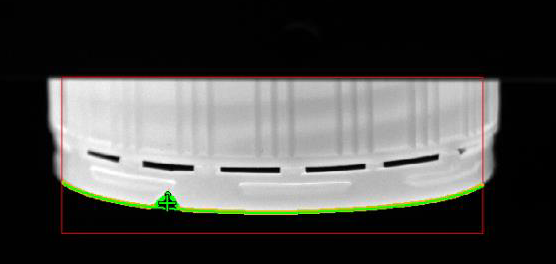
In the realm of industrial automation, glass and transparent materials represent the “final frontier” of machine vision. Unlike opaque objects, transparent substrates do not simply reflect light; they transmit, refract, and polarize it. Achieving a 100% quality hit rate requires more than just a high-resolution camera—it requires a sophisticated understanding of Vision Lighting for Glass and Transparent Material Inspection.
Dai flaconi farmaceutici ai parabrezza automotive, la giusta strategia di illuminazione è la differenza tra rilevare un difetto critico e una non conformità che arriva al cliente.

Vuoi essere aiutato a scegliere il prodotto giusto?
Le sfide specifiche dell’ispezione di vetro e materiali trasparenti
La difficoltà principale nell’ispezione del vetro risiede nelle sue proprietà ottiche. Il vetro è per natura progettato per lasciar passare la luce, rendendo quasi inutili le tecniche di illuminazione frontale standard.
Gli ingegneri si trovano ad affrontare tre ostacoli principali:
- Riflessione speculare: superfici altamente lucidate creano “hotspot” che accecano i sensori della telecamera.
- Basso contrasto: difetti come bolle trasparenti o graffi hanno lo stesso colore dello sfondo.
- Rifrazione: la natura curva di molti oggetti in vetro (come le bottiglie) devia la luce, creando distorsioni ottiche che possono essere confuse con difetti.
Modalità in trasmissione: retroilluminazione per il rilevamento di difetti interni
The most common and effective setup for transparent materials is Transmission Mode. By placing a uniform LED backlight, such as the RODER BL3 Series, directly behind the object, the system operates on the principle of light occlusion.
When the light passes through the glass, any internal impurity—such as a stone, a metallic inclusion, or a large bubble—blocks or scatters the light. This creates a high-contrast dark spot against a bright white field, allowing the vision software to trigger a “Fail” result instantly. This is the gold standard for verifying liquid fill levels and checking for contaminants in the food and beverage industry.
Modalità in riflessione: rilevamento di coating superficiali e graffi
While transmission looks through the glass, Reflection Mode looks at the surface. This technique is essential for inspecting specialized coatings (like anti-reflective or hydrophobic layers) and detecting fine surface scratches that do not penetrate the thickness of the material.
By angling the light source at a specific incidence, the camera captures the light bouncing off the surface. Any disruption in the coating or a physical scratch will alter the reflection pattern, making the defect visible as a bright glint or a dark void.
H3: illuminazione darkfield per inclusioni e microbolle
When defects are smaller than 0.1mm, standard backlighting may “wash out” the flaw. This is where Darkfield Illumination shines. In a darkfield setup, the light source is positioned at a low angle, so the light does not directly enter the camera lens.
In a perfect piece of glass, the camera sees a black image. however, if a micro-bubble or a tiny inclusion is present, it scatters the light into the lens. The result is a brilliant, glowing defect against a pitch-black background. This method is unparalleled for high-precision optical component inspection.
H3: tecniche di illuminazione laterale per pannelli di vetro piano
For large, flat glass panels, Edge Lighting (or Side-lighting) is a highly efficient technique. Light is injected into the thickness of the glass from the sides. Due to Total Internal Reflection (TIR), the light remains trapped within the “sandwich” of the glass.
If there is a crack, a chip, or a laser-etched mark on the surface, the TIR is “frustrated,” and the light escapes at that specific point. This causes the defect to illuminate brightly, making it easy for the vision system to identify structural cracks that could lead to catastrophic breakage.
H3: SWIR per ispezioni in trasmissione nel vicino infrarosso
Sometimes, the most dangerous defects are invisible to the human eye and standard CMOS sensors. Short-Wave Infrared (SWIR) lighting and imaging allow for inspection in the 900nm to 1700nm range.
Lo SWIR è particolarmente utile per:
- Ispezionare plastiche opache che risultano trasparenti nello spettro IR.
- Rilevare umidità o livelli di liquido attraverso vetri scuri.
- Identificare coating chimici specifici che reagiscono solo a lunghezze d’onda nell’infrarosso.
H3: luce polarizzata per l’analisi della birifrangenza da stress
Glass is a “frozen liquid.” If it is cooled too quickly or handled improperly, internal stresses develop. These stresses are invisible under normal light but can cause the glass to shatter spontaneously.
By using Polarised Light, manufacturers can perform Stress Birefringence Analysis. By placing the glass between two crossed polarizers, internal stress patterns appear as colorful “fringes” or rainbow patterns. This allows quality controllers to reject components with high structural tension before they reach the assembly line.
Soluzioni RODER Vision per l’ispezione di vetro e componenti ottici
At RODER, we understand that every glass inspection challenge is unique. Our Vision BL3 Series and specialized optical illuminators are engineered to provide the uniformity, stability, and spectral purity required for high-speed industrial environments.
Che si tratti di misurare l’accuratezza dimensionale di una lente a ±0,05 mm o di rilevare bolle da 0,3 mm in flaconi medicali, le nostre soluzioni di illuminazione forniscono la base per un sistema di visione robusto e “zero-defect”.
Prodotti e tecnologie


Contatti e informazioni
Contatto per informazioni generali : info@roder.it
Partner per l’Integrazione di Sistemi e Sensori : www.roder.it
Divisione Roder Artificial Vision : www.rodervision.com
Divisione RODER Instruments : www.innovacheck.com
Ulteriori informazioni su RODER VISIONE : chi siamo
Le informazioni contenute in questo sito web sono fornite solo a scopo informativo. Sebbene siano state preparate con la massima cura, non costituiscono un’offerta contrattuale o un impegno vincolante alla fornitura. Possono contenere errori di trascrizione, traduzione o tipografici. Per informazioni precise e aggiornate, ti invitiamo a contattare direttamente la nostra azienda.
Nota bene: alcune immagini presenti in questo sito web sono state intenzionalmente generate utilizzando l’Intelligenza Artificiale (AI). Ciò è dovuto al fatto che, per molte applicazioni e progetti, non è possibile divulgare fotografie dell’installazione o del sistema reale a causa di accordi di riservatezza, clausole contrattuali e accordi di non divulgazione (NDA).
Related topics :
 Ispezione di bottiglie in vetro e PET: come garantire la conformità con retroilluminatori LED.
 Ispezione di etichette con illuminazione diffusa: rilevamento di pieghe ed errori di stampa
 Illuminatori LED per logistica ed e-commerce: misurazione, smistamento e ispezione etichette
 Luci di linea per l’ispezione delle bobine: Massimizzare la Produttività nella Produzione Continua
 Integrità delle bottiglie di vetro: Rilevamento di Crepe con Retroilluminazione Diffusa