


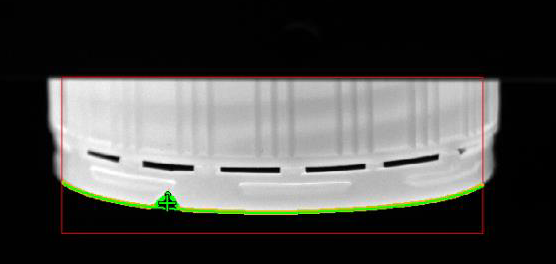
In the realm of industrial automation, glass and transparent materials represent the „final frontier“ of machine vision. Unlike opaque objects, transparent substrates do not simply reflect light; they transmit, refract, and polarize it. Achieving a 100% quality hit rate requires more than just a high-resolution camera—it requires a sophisticated understanding of Vision Lighting for Glass and Transparent Material Inspection.
Von pharmazeutischen Vials bis zu Automotive-Windschutzscheiben: Die richtige Beleuchtungsstrategie entscheidet darüber, ob ein kritischer Fehler erkannt wird oder als Kundenreklamation zurückkehrt.

Möchten Sie Hilfe bei der Auswahl des richtigen Produkts?
Die besonderen Herausforderungen bei der Inspektion von Glas und transparenten Materialien
Die Hauptschwierigkeit bei der Glasinspektion liegt in seinen optischen Eigenschaften. Glas ist von Natur aus darauf ausgelegt, Licht durchzulassen, wodurch Standard-Frontbeleuchtungstechniken nahezu wirkungslos werden.
Die Ingenieure stehen vor drei wesentlichen Hürden:
- Spiegelnde Reflexion: Stark polierte Oberflächen erzeugen „Hotspots“, die Kamerasensoren überstrahlen.
- Niedriger Kontrast: Defekte wie klare Blasen oder Kratzer haben dieselbe Farbe wie der Hintergrund.
- Brechung: Die gekrümmte Form vieler Glasobjekte (wie Flaschen) lenkt das Licht ab und erzeugt optische Verzerrungen, die fälschlich für Defekte gehalten werden können.
Transmissionsmodus: Backlight für die Erkennung innerer Defekte
The most common and effective setup for transparent materials is Transmission Mode. By placing a uniform LED backlight, such as the RODER BL3 Series, directly behind the object, the system operates on the principle of light occlusion.
When the light passes through the glass, any internal impurity—such as a stone, a metallic inclusion, or a large bubble—blocks or scatters the light. This creates a high-contrast dark spot against a bright white field, allowing the vision software to trigger a „Fail“ result instantly. This is the gold standard for verifying liquid fill levels and checking for contaminants in the food and beverage industry.
Reflexionsmodus: Erkennung von Oberflächenbeschichtungen und Kratzern
While transmission looks through the glass, Reflection Mode looks at the surface. This technique is essential for inspecting specialized coatings (like anti-reflective or hydrophobic layers) and detecting fine surface scratches that do not penetrate the thickness of the material.
By angling the light source at a specific incidence, the camera captures the light bouncing off the surface. Any disruption in the coating or a physical scratch will alter the reflection pattern, making the defect visible as a bright glint or a dark void.
H3: Darkfield-Beleuchtung für Einschlüsse und Mikroblasen
When defects are smaller than 0.1mm, standard backlighting may „wash out“ the flaw. This is where Darkfield Illumination shines. In a darkfield setup, the light source is positioned at a low angle, so the light does not directly enter the camera lens.
In a perfect piece of glass, the camera sees a black image. however, if a micro-bubble or a tiny inclusion is present, it scatters the light into the lens. The result is a brilliant, glowing defect against a pitch-black background. This method is unparalleled for high-precision optical component inspection.
H3: Edge-Lighting-Techniken für Flachglaspaneele
For large, flat glass panels, Edge Lighting (or Side-lighting) is a highly efficient technique. Light is injected into the thickness of the glass from the sides. Due to Total Internal Reflection (TIR), the light remains trapped within the „sandwich“ of the glass.
If there is a crack, a chip, or a laser-etched mark on the surface, the TIR is „frustrated,“ and the light escapes at that specific point. This causes the defect to illuminate brightly, making it easy for the vision system to identify structural cracks that could lead to catastrophic breakage.
H3: SWIR für Inspektion in NIR-Transmission
Sometimes, the most dangerous defects are invisible to the human eye and standard CMOS sensors. Short-Wave Infrared (SWIR) lighting and imaging allow for inspection in the 900nm to 1700nm range.
SWIR ist besonders nützlich für:
- Inspektion opaker Kunststoffe, die im IR-Spektrum transparent sind.
- Erkennung von Feuchtigkeit oder Flüssigkeitsständen durch dunkles Glas.
- Erkennung spezifischer chemischer Beschichtungen, die nur auf Infrarot-Wellenlängen reagieren.
H3: Polarisiertes Licht zur Analyse der Spannungsdoppelbrechung
Glass is a „frozen liquid.“ If it is cooled too quickly or handled improperly, internal stresses develop. These stresses are invisible under normal light but can cause the glass to shatter spontaneously.
By using Polarised Light, manufacturers can perform Stress Birefringence Analysis. By placing the glass between two crossed polarizers, internal stress patterns appear as colorful „fringes“ or rainbow patterns. This allows quality controllers to reject components with high structural tension before they reach the assembly line.
RODER Vision Lösungen für die Inspektion von Glas und optischen Komponenten
At RODER, we understand that every glass inspection challenge is unique. Our Vision BL3 Series and specialized optical illuminators are engineered to provide the uniformity, stability, and spectral purity required for high-speed industrial environments.
Ob Sie die Dimensionsgenauigkeit einer Linse auf ±0,05 mm messen oder Blasen von 0,3 mm in medizinischen Vials erkennen — unsere Beleuchtungslösungen bilden die Grundlage für ein robustes „Zero-Defect“-Bildverarbeitungssystem.
Produkte und Technologien


Kontakte & Informationen
Kontakt für allgemeine Informationen : info@roder.it
Partner für System- und Sensorintegration : www.roder.it
RODER Bildverarbeitungs-Abteilung : www.rodervision.com
RODER Abteilung Messinstrumente : www.innovacheck.com
Mehr Informationen über RODER VISION : about us
Die Informationen auf dieser Website dienen ausschließlich Informationszwecken. Obwohl sie mit größter Sorgfalt erstellt wurden, stellen sie kein vertragliches Angebot und keine verbindliche Lieferverpflichtung dar. Sie können Übertragungs-, Übersetzungs- oder Tippfehler enthalten. Für präzise und aktuelle Informationen wenden Sie sich bitte direkt an unser Unternehmen.
Bitte beachten Sie: Einige Bilder auf dieser Website wurden absichtlich mittels Künstlicher Intelligenz (KI) generiert. Dies liegt daran, dass es bei vielen Anwendungen und Projekten aufgrund von Vertraulichkeitsvereinbarungen, Vertragsklauseln und Geheimhaltungsvereinbarungen (NDAs) nicht möglich ist, Fotografien der tatsächlichen Anlage oder des Systems zu veröffentlichen.
Related topics :
 Inspektion von Glas- und PET-Flaschen: Wie man Konformität mit LED-Backlights sicherstellt.
 Integration von LED-Beleuchtung in automatische Maschinen: Lösungen für die Teilebeladung.
 Die Vorteile von LED-Backlight bei präziser Dimensionsmessung
 Maximierung der Pick-&-Place-Genauigkeit: die Schlüsselrolle des Backlights.
 Integrität von Glasflaschen: Risse mit diffuser Hintergrundbeleuchtung erkennen