


Defect Detection
Defect detection is the primary objective of most industrial machine vision inspection systems. Detecting surface scratches, cracks, voids, inclusions, contamination, dimensional deviations, and assembly errors requires illumination that creates sufficient contrast between the defect and the surrounding material. The choice of LED lighting technique — darkfield, coaxial, backlight, diffuse, or structured light — determines whether a defect is visible or hidden in the image. RODER Vision LED illuminators are selected and configured to maximise defect contrast for specific materials, defect types, and production speeds. Reliable defect detection reduces scrap rates, prevents non-conforming products from reaching customers, and supports process improvement by providing quantitative data on defect frequency and distribution. RODER Vision supports engineers with application-specific lighting recommendations to optimise defect detection performance from the outset.
-
Lighting Strategies for SMD Pick-and-Place Robots in Electronic Component Placement
Precise LED illumination is the key to reliable SMD pick-and-place robot guidance. See how to pick ring lights, backlights, and low-angle illuminators for PCB component placement inspection.
-
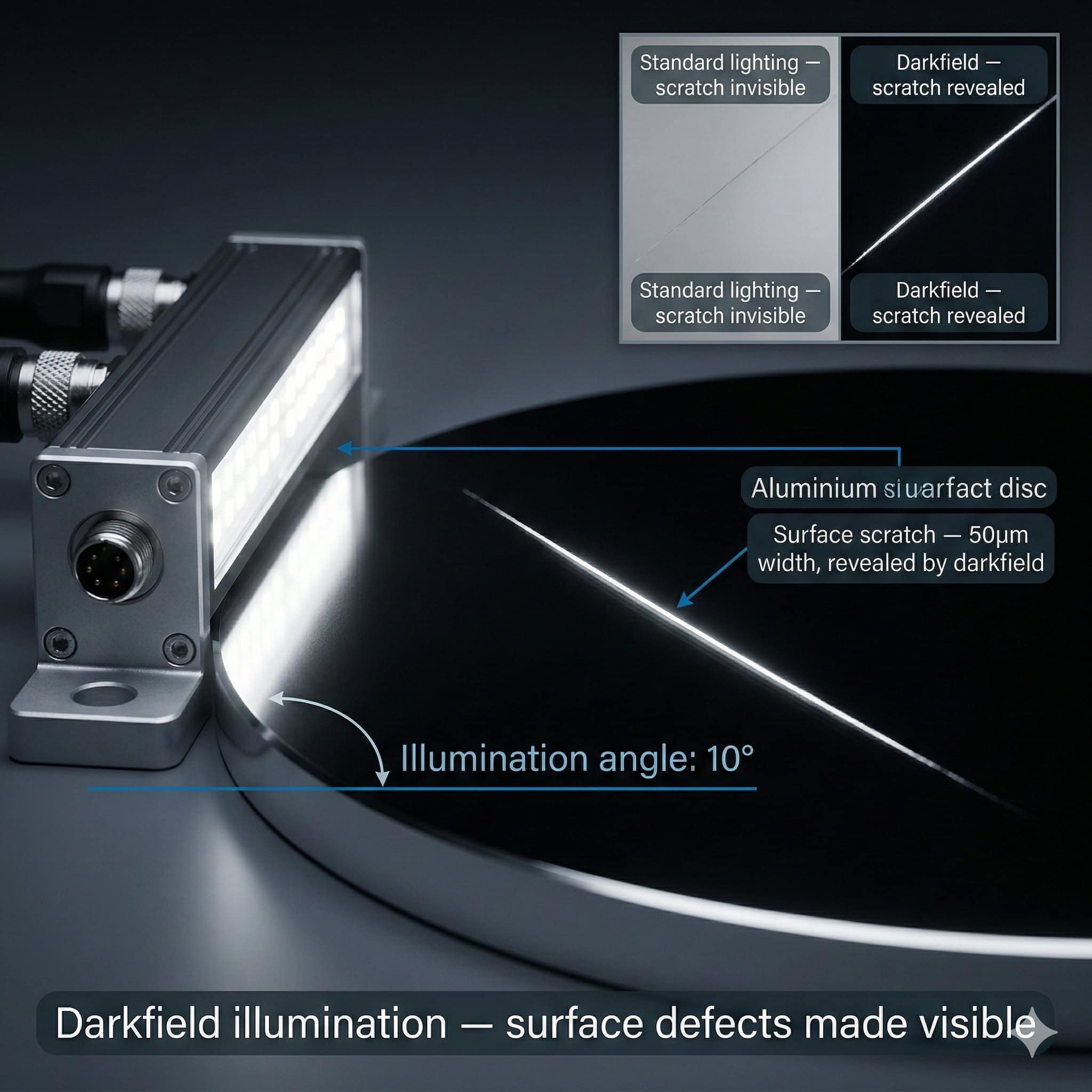
Darkfield Lighting: Revealing Surface Defects Hidden Under Standard Illumination
How darkfield (low-angle) illumination uses grazing incidence to reveal scratches, cracks, engraving, and surface texture on metals, glass, and plastics.
-
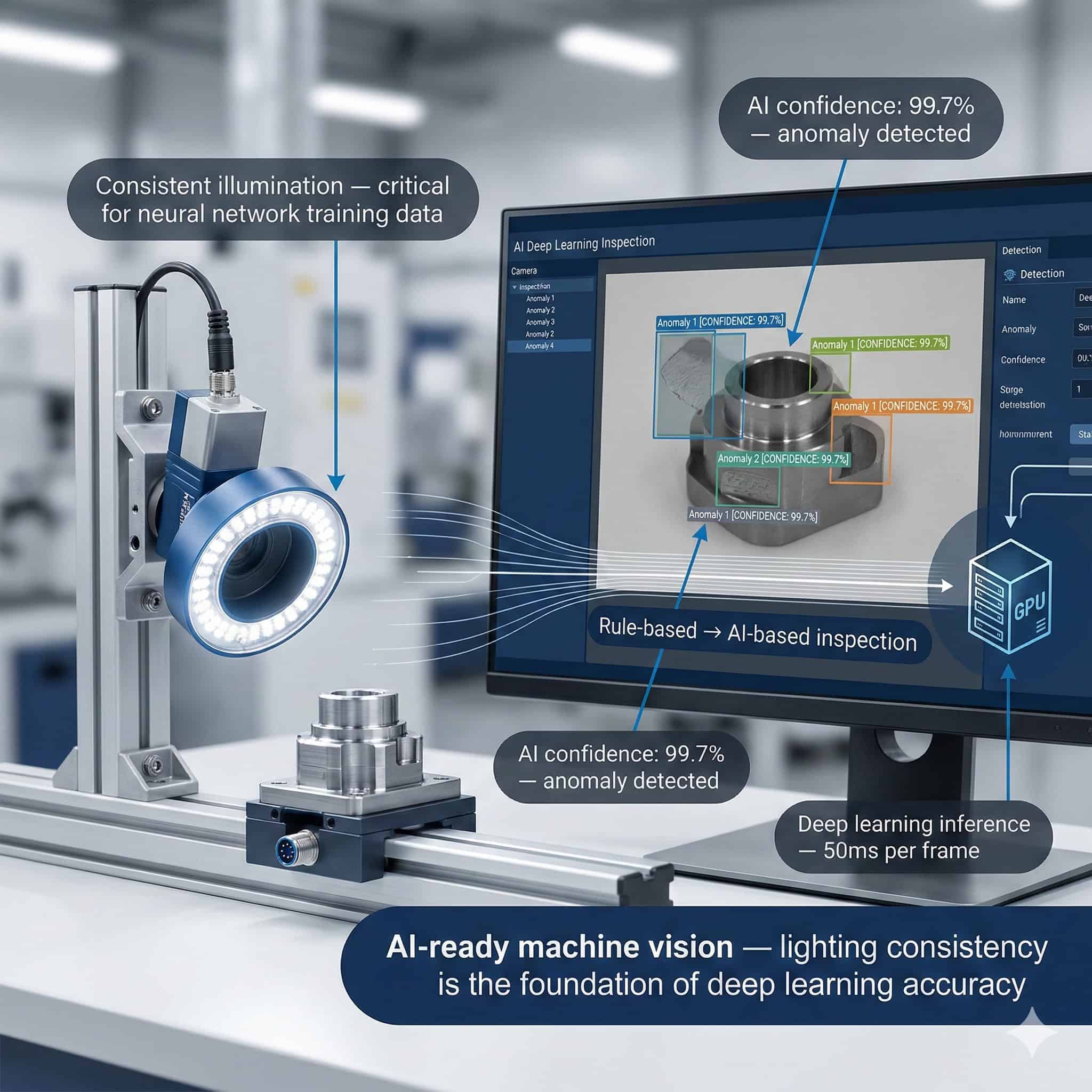
AI-Powered Machine Vision: How Deep Learning Reshapes Inspection Lighting Requirements
Deep learning is reshaping industrial inspection, yet AI-based machine vision still leans on consistent, well-designed illumination. See how neural networks change lighting requirements, why dataset quality starts with the light source, and what AI-ready illumination means in practice.