
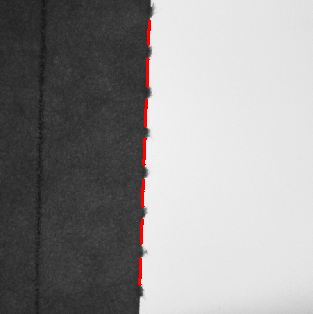
Web inspection covers a broad category of industrial quality control applications where a continuous moving material — film, paper, metal foil, woven fabric, nonwoven, coated substrate, or printed web — is inspected at full production speed. The goal is to detect surface defects, print errors, coating variations, and contamination before the material is wound or converted into finished product. Catching defects in-line eliminates the cost of processing defective material through downstream operations and prevents defective product from reaching the customer.
Line scan cameras are the standard imaging solution for web inspection. A line scan camera captures one line of the web per exposure cycle, building up a two-dimensional image of the web surface as the material moves past the camera. The illumination for line scan cameras must deliver high, uniform intensity along the full width of the web in a narrow line precisely aligned with the camera’s field of view. LED line lights are the preferred illumination source for this application. They provide high intensity in a narrow beam, stable output over long continuous duty cycles, and precise control of the illumination geometry.
Line Scan Camera Illumination Requirements
Line scan cameras operate at line rates from a few kilohertz to over 100 kHz in high-speed applications. Each line exposure is correspondingly short: at 50 kHz line rate, each line is exposed for 20 microseconds. At 100 kHz, each line is exposed for 10 microseconds. The illumination must deliver sufficient photons to the sensor during this short exposure to achieve the target grey level in the image.
For a web moving at 300 m/min (5 m/s) with a camera resolution of 0.1 mm per pixel, the line rate required to avoid pixel elongation in the web direction is 50,000 lines per second. The 20-microsecond exposure at this line rate limits the available integration time to a very small fraction of a millisecond. The illumination intensity required to achieve adequate grey levels at these short exposures is very high. Line light illuminators designed for web inspection must deliver this intensity uniformly across the full web width, which may range from 200 mm to over 3000 mm.

Do you want help choosing the product?
Line Light Geometry for Web Inspection
The geometry of the line light relative to the web surface and the camera determines what types of defects are detectable and which surface features create contrast in the image. The three fundamental illumination geometries used in web inspection are bright-field, dark-field, and transmitted illumination.
Bright-Field Illumination
In bright-field illumination, the line light is positioned so that its specular reflection angle falls within the acceptance cone of the camera lens. The camera images the specular reflection of the illuminator from the web surface. This geometry produces high-intensity images of smooth, reflective surfaces. Defects that interrupt or disturb the specular reflection, such as scratches, pits, inclusions, and coating voids, appear as dark features against the bright background. Bright-field illumination is the preferred geometry for inspecting smooth, reflective webs such as metal foil, glossy coated paper, and calendered film.
Dark-Field Illumination
In dark-field illumination, the line light is positioned at a low angle relative to the web surface, outside the specular reflection angle of the camera. The web background appears dark in the image because the specular reflection does not enter the camera. Defects that scatter light, such as surface contamination, raised fibres, coating lumps, and embossed features, appear as bright features against the dark background. Dark-field illumination provides very high contrast for surface relief defects that are invisible in bright-field imaging.
The illumination angle for dark-field web inspection is typically 5° to 20° from the web surface plane. At these low angles, the illumination path across the web width is much longer than the working distance measured perpendicular to the web. For a web 1000 mm wide illuminated at 10° from the surface at a perpendicular working distance of 200 mm, the illumination path length across the web is approximately 1150 mm. The line light must maintain uniform intensity across this extended path length.
Transmitted Illumination for Transparent and Translucent Webs
For transparent and translucent webs such as clear film, thin paper, woven fabric, and nonwoven materials, transmitted illumination through the web provides the best contrast for thickness variations, inclusions, holes, and contamination. The line light is positioned below the web and the camera above. The transmitted light intensity varies with local web thickness and opacity, making thickness variations and inclusions visible as brightness modulations in the image.
Uniformity Specifications for Web Inspection Line Lights
Uniformity is the most critical optical specification for line lights used in web inspection. Any variation in the illumination intensity along the line light length appears as a corresponding variation in the grey level of the camera image across the web width. This apparent grey level variation can mask real defects or generate false defect indications across the web profile.
The uniformity requirement for web inspection line lights is typically stated as the ratio of the minimum to the maximum intensity measured across the working length at the defined working distance. For demanding web inspection applications, uniformity of 90% or better is required across the full web width. RODER Vision line light illuminators achieve these uniformity specifications through matched LED selection, precision optical design, and controlled assembly processes that ensure consistent light output across the full illuminator length.
Synchronisation with Line Scan Cameras
Line scan cameras for web inspection typically operate in free-running mode at a fixed line rate, or in encoder-triggered mode where each line is triggered by a pulse from a rotary encoder mounted on a drive roll. In both cases, the illumination must maintain constant output intensity throughout the inspection run. Any variation in illumination intensity that is synchronous with the camera line rate produces periodic banding artefacts in the image that degrade defect detection performance.
Continuous Mode vs Strobe Mode for Line Scan
Line scan cameras for web inspection are most commonly used with continuous-mode illumination. The camera exposure is controlled by the camera’s integration time setting, and the illumination remains on continuously. This simplifies synchronisation because no trigger signal is required for the illuminator. The illuminator must maintain very stable output over the full duration of the inspection run, which may be hours or days for large web rolls.
For very high line rate applications where the required intensity in continuous mode exceeds the thermal rating of the illuminator, strobe mode is used. The illuminator is pulsed once per line, synchronised to the camera line trigger output. The pulse duration is equal to the camera integration time. This allows the illuminator to deliver higher peak intensity during the short integration window without exceeding its average thermal rating. RODER Vision line light illuminators support both continuous and strobe operation modes.
Wavelength Selection for Web Materials
The optimum illumination wavelength for web inspection depends on the optical properties of the web material and the nature of the defects to be detected. For most surface defect detection on opaque webs, red or near-infrared illumination at 625 nm to 850 nm is preferred because it maximises signal-to-noise ratio with standard silicon line scan sensors and reduces the visibility of web texture that can mask subtle surface defects.
For colour print inspection and colour deviation detection on printed webs, white illumination with a stable colour temperature is used to provide accurate colour rendition across the full web width. UV illumination is used for inspecting fluorescent security features on banknote paper, security printing substrates, and authentication labels in web form. Near-infrared illumination penetrates surface coatings and can reveal subsurface features in multi-layer paper and cardboard webs that are invisible at visible wavelengths.
Thermal Stability in Long-Duration Web Inspection Runs
Web inspection lines operate for extended periods without interruption. Roll changes may occur every few hours, but the inspection system runs continuously between changes. The illumination must maintain stable intensity throughout the full run. Any drift in illumination intensity due to LED warming during the inspection run appears as a gradual change in the image grey level across the length of the web roll. This drift can cause defects to be missed at the beginning or end of the roll when the illuminator output differs from the level at which the inspection thresholds were calibrated.
RODER Vision line light illuminators incorporate HTTM thermal management technology. The HTTM system minimises thermal drift by controlling the LED junction temperature from the moment the illuminator is switched on, reaching thermal equilibrium quickly and maintaining stable output throughout the inspection run. This eliminates the need for warm-up delays before the inspection can begin and prevents output drift during long production runs.
Products and Technologies
RODER Vision Illuminator Families for Web and Line Scan Inspection
The following RODER Vision product families are suitable for line scan web inspection in continuous production environments.

DL5 — High Intensity LED Matrix
High peak intensity for line scan web inspection at high line rates. Bar format for wide web coverage. Bright-field and dark-field configurations. Multi-wavelength options.

DL6 — High Density LED Matrix
HTTM thermal management for stable output in long production runs. Multi-wavelength. Continuous and strobe modes. Large bar format for wide web widths.

BL3 — LED Backlights
Transmitted illumination for transparent and translucent web inspection. High uniformity for accurate thickness and inclusion detection. Multiple wavelengths and format sizes.

FD2 — Flat Dome LED Illuminators
Diffuse illumination for printed web colour inspection. Eliminates specular reflections on gloss-coated substrates. Uniform background for accurate colour and density measurement.
Frequently Asked Questions
The best illumination geometry depends on the web material and the defect types to be detected. Bright-field illumination is preferred for smooth, reflective webs where defects appear as dark spots interrupting the specular reflection. Dark-field illumination at low angles is preferred for detecting surface relief defects such as contamination and raised fibres. Transmitted illumination is used for transparent and translucent webs to detect thickness variations and inclusions.
For demanding web inspection applications, uniformity of 90% or better is required across the full web width at the defined working distance. Lower uniformity produces grey level variations across the image width that can mask real defects or generate false indications. The uniformity specification should be verified with a calibrated measurement setup at the actual working distance of the inspection system before accepting the illuminator.
Continuous mode is the standard choice for line scan web inspection because it simplifies synchronisation and eliminates the need for a trigger signal to the illuminator. Strobe mode is used when the required intensity in continuous mode exceeds the thermal rating of the illuminator, which occurs at very high line rates. RODER Vision line light illuminators support both modes.
Thermal drift causes the illumination intensity to change as the LED junction temperature stabilises after switch-on. This appears as a gradual change in the image grey level across the length of the inspected web roll. Defects may be missed at the start or end of the roll when the illuminator output differs from the level at which inspection thresholds were calibrated. HTTM thermal management in RODER Vision illuminators minimises this drift for stable output throughout long production runs.
White illumination is used for colour print inspection and colour deviation detection on printed webs. Red or near-infrared illumination maximises signal-to-noise ratio for surface defect detection on monochrome inspection with silicon line scan sensors. UV illumination is used for fluorescent security feature inspection on security paper and authentication substrates. Near-infrared illumination can reveal subsurface features in multi-layer paper and cardboard webs.
More information and contacts
Systems and Sensor Integration Partners : www.roder.it
Artificial Vision Division : www.rodervision.com
More information about RODER VISION : about us
Contact for general information : info@roder.it
The information on this website is provided for information purposes only. Although it has been prepared with the utmost care, it does not constitute a contractual offer or a binding commitment to supply. It may contain transcription, translation or typographical errors. For precise and up-to-date information, please contact our company directly.
Related topics :
 Logistics Automation: High-Intensity Bar Lights for Large Parcel Scanning
 Label Inspection: Detecting Creases and Print Errors with Diffuse Lighting
 Fastener Dimensional Checks: Using Telecentric Lights for High-Precision Screws
 UV LED Illumination for Fluorescent Leak Detection and Security Markers
 How to Read Blurred Barcodes: The Synergy Between Shutter Speed and Lighting