
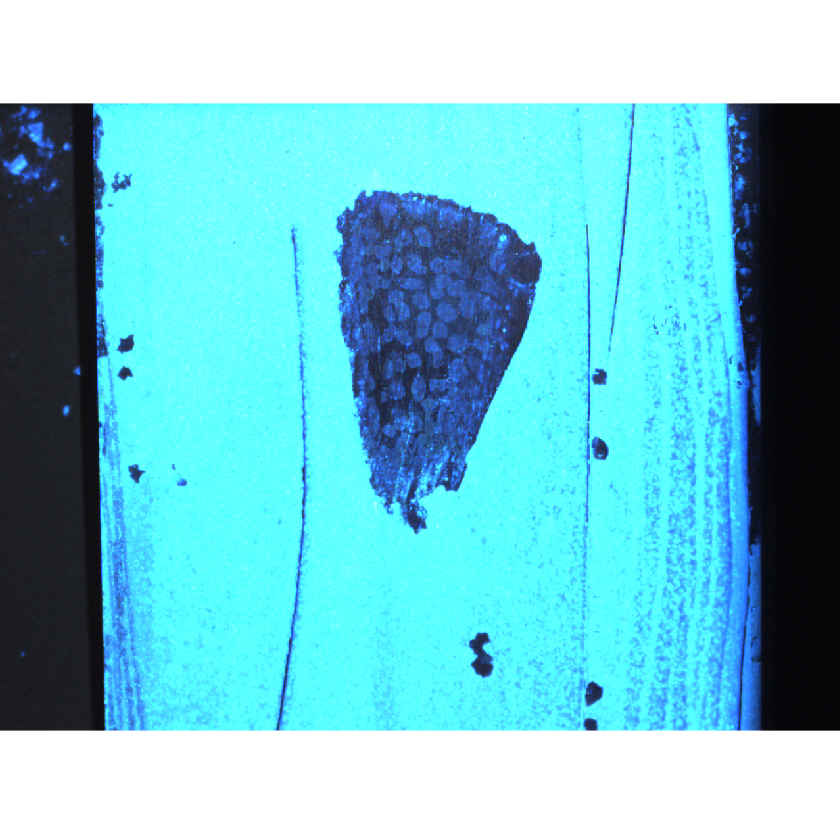
Ultraviolet LED illumination opens a category of industrial inspection applications that are simply not possible with visible-wavelength lighting. Many materials, inks, coatings, and biological substances fluoresce under UV excitation: they absorb UV photons and re-emit light at a longer, visible wavelength. This fluorescence emission is easily captured by a standard monochrome or colour camera, making invisible features visible with very high contrast against a dark background.
The applications of UV LED illumination in machine vision span leak detection with fluorescent tracers, security marker verification on labels and documents, adhesive and sealant inspection, contamination detection on food contact surfaces, and authentication of high-value products. Each application has specific requirements for UV wavelength, illumination intensity, illuminator geometry, and camera and filter configuration. This guide covers the technical principles and practical design considerations for each category.
UV Wavelengths in Industrial Vision Applications
Industrial UV LED illuminators operate at two primary wavelength bands: 365 nm and 395 nm. The choice between these wavelengths significantly affects the performance of fluorescence-based inspection applications.
365 nm UV Illumination
Illuminators at 365 nm produce true UVA radiation. This wavelength excites a wide range of fluorescent materials including most commercial UV-reactive dyes, fluorescent tracers used in leak detection, optical brighteners in paper and textiles, and many biological fluorophores. At 365 nm, the excitation radiation itself is completely invisible to standard silicon-based camera sensors without the use of a UV-passing filter. The camera image shows only the fluorescence emission, producing very high contrast between fluorescent and non-fluorescent areas.
The main limitation of 365 nm LEDs is lower output power compared to 395 nm. The LED efficiency at 365 nm is lower than at longer UV wavelengths, which means that more LEDs or higher drive current is required to achieve the same surface irradiance. Thermal management is more critical for 365 nm illuminators because of the higher thermal load per unit of optical output.

Do you want help choosing the product?
395 nm UV Illumination
Illuminators at 395 nm produce near-UV radiation that borders the visible spectrum. This wavelength is slightly visible to the human eye as a faint violet glow and is also partially detectable by standard camera sensors. The main advantage of 395 nm is higher LED efficiency and higher achievable surface irradiance for the same drive power. Many commercial fluorescent tracers and security inks respond well to 395 nm excitation.
The partial visibility of 395 nm radiation in camera images means that a short-pass or band-pass filter is required on the camera lens to block the excitation wavelength and pass only the fluorescence emission. Without this filter, the 395 nm background illumination partially overwhelms the fluorescence signal and reduces detection contrast. RODER Vision UV illuminators are available at both 365 nm and 395 nm to match the specific fluorophore excitation requirements of the application.
Fluorescent Leak Detection
Leak detection with fluorescent tracers is one of the most demanding and highest-value UV inspection applications. A small quantity of UV-fluorescent dye is added to the fluid or gas in the system under test. Any leakage point is detected by imaging the exterior of the system under UV illumination. The leaked fluorescent tracer fluoresces brightly under UV excitation, making even very small leak points visible against the dark background of the surrounding surface.
Applications in Hydraulic and Pneumatic Systems
Hydraulic systems in automotive, aerospace, and industrial machinery use fluorescent tracer dyes to locate minute leak points on hoses, connectors, seals, and heat exchangers. The fluorescent tracer is typically added to the hydraulic fluid or coolant at a concentration of 0.1% to 0.5%. After running the system under operating pressure, the exterior is imaged under UV illumination. Even a single drop of leaked fluid fluoresces brightly and is immediately detectable.
Machine vision inspection replaces manual UV lamp inspection in high-volume production environments. An automated UV inspection station images the complete exterior of the assembled component at defined camera positions. The image processing algorithm detects fluorescent spots above a defined size and intensity threshold. The system classifies each detected spot and triggers the reject mechanism for components with confirmed leak indications.
Leak Detection in Refrigeration and Air Conditioning Systems
Refrigeration and air conditioning systems require 100% leak testing before shipment. UV fluorescent tracer dyes are compatible with most refrigerant and compressor oil formulations. The assembled system is charged with refrigerant containing the UV tracer and pressurised. Leak points are detected by UV machine vision inspection of the brazed joints, valve connections, and pipe penetrations.
Security Marker and Authentication Verification
Security markers that are invisible under white light and fluoresce under UV illumination are widely used for product authentication, document security, and brand protection. Machine vision systems using UV LED illuminators can verify the presence, position, and content of these security features at production speed.
Pharmaceutical Label Authentication
Pharmaceutical labels often incorporate UV-fluorescent security features including UV-reactive inks, fluorescent fibres embedded in the label substrate, and UV-visible serial numbers or codes. Vision inspection under UV illumination verifies that all required security features are present and correctly positioned. This inspection is integrated into the label application station and operates at full packaging line speed.
Document and Banknote Verification
High-security documents including identity documents, certificates, and banknotes incorporate complex UV-fluorescent patterns that are impossible to reproduce without access to the original fluorescent ink formulations. Machine vision inspection under UV illumination can verify the presence and correct pattern of these features and reject counterfeit or tampered documents in automated processing systems.
Adhesive, Sealant, and Coating Inspection
Many adhesives, sealants, and coatings used in manufacturing are formulated with UV-fluorescent additives. This allows the presence, coverage, and bead continuity of the adhesive or sealant to be verified by UV machine vision after application and before assembly.
Adhesive Bead Presence and Continuity
Structural adhesive applied to automotive body panels, door seals, and bonded assemblies must be continuous and within the specified width and position tolerance. UV-fluorescent adhesive formulations allow the complete bead to be imaged under UV illumination. The image processing algorithm measures bead width, detects gaps or skip sections, and verifies that the bead is within the permitted positional tolerance relative to the part geometry.
Gasket and Seal Compound Verification
Sealing compounds applied to gasket faces, threaded connections, and flange surfaces can be verified by UV inspection if the compound contains a UV-fluorescent additive. The presence of the compound on the critical sealing surfaces is confirmed by the fluorescence image before assembly. Missing or incorrectly positioned compound is detected before the joint is made, preventing the cost and effort of disassembly and rework.
UV Illuminator Design and Integration Considerations
UV LED illuminators for machine vision applications require careful design and integration to achieve reliable, stable, and safe operation.
Thermal Management for UV LEDs
UV LED junction temperature has a strong effect on both output intensity and wavelength stability. As the LED junction temperature increases, the optical output decreases and the emission peak shifts slightly toward longer wavelengths. For fluorescence-based inspection, wavelength stability is critical because a shift in the excitation wavelength changes the fluorescence excitation efficiency and alters the apparent brightness of the fluorescent feature in the image. RODER Vision UV illuminators incorporate HTTM thermal management technology to control LED junction temperature and maintain stable UV output intensity and wavelength across all operating conditions.
Camera Filter Requirements
Fluorescence imaging requires a long-pass or band-pass filter on the camera lens to block the UV excitation wavelength and pass only the fluorescence emission at visible wavelengths. Without this filter, the reflected UV illumination from the scene background partially overwhelms the weaker fluorescence signal. The filter cut-on wavelength must be selected to fully block the UV excitation wavelength while passing the fluorescence emission band of the specific fluorophore used.
For 365 nm illumination, a long-pass filter with cut-on at 400 nm to 420 nm is used. For 395 nm illumination, a filter with cut-on at 420 nm to 450 nm is needed to adequately block the stronger near-UV background. RODER Vision optical filter accessories are available to complete the UV fluorescence inspection system.
Operator Safety
UV radiation at 365 nm and 395 nm can cause eye and skin damage with sustained exposure. Industrial UV LED illuminators for machine vision are typically installed inside enclosed inspection cells where operator exposure is eliminated during operation. When maintenance or setup work requires operation with open guards, appropriate UV-protective eyewear must be worn. RODER Vision UV illuminators comply with CE marking requirements for electrical and optical safety.
Products and Technologies
RODER Vision Illuminator Families for UV Applications
The following RODER Vision product families support UV illumination for fluorescent leak detection, security marker verification, and adhesive inspection applications.

DL6 — High Density LED Matrix
Available with UV 365 nm and 395 nm LEDs. High-density matrix for area UV illumination. HTTM thermal management for stable UV output. Ideal for label and security feature inspection.

DC6 — High Density LED Ring
UV ring illumination for top-view fluorescence inspection of adhesive beads, seals, and surface coatings. Multi-wavelength options including 365 nm and 395 nm UV.

DL5 — High Intensity LED Matrix
High peak UV intensity in strobe mode for leak detection at high inspection speed. Strong UV excitation to detect minimal fluorescent tracer concentrations.

FD2 — Flat Dome LED Illuminators
Diffuse UV illumination for uniform fluorescence excitation on flat labels and documents. Eliminates directional shadows. UV 365 nm and 395 nm options available.
Frequently Asked Questions
365 nm produces true UVA radiation that excites a wider range of fluorescent materials with no background visibility in camera images. It requires a filter to block the UV reflection. 395 nm LEDs are more efficient and produce higher surface irradiance but are partially visible to cameras and require a tighter cut-on filter. For the most demanding fluorescence applications, 365 nm provides better contrast. For general fluorescence inspection, 395 nm is adequate and more cost-effective.
A small amount of UV-fluorescent dye tracer is added to the fluid or gas in the system. After pressurisation, the exterior is imaged under UV illumination. Any leaked fluid fluoresces brightly against the dark surrounding surface. The machine vision algorithm detects fluorescent spots above a defined size and intensity threshold and triggers rejection of leaking components. The method detects very small leaks that are invisible under white light.
Yes. A long-pass or band-pass filter on the camera lens is required to block the UV excitation wavelength and pass only the visible fluorescence emission. Without the filter, reflected UV from the scene background overwhelms the weaker fluorescence signal. For 365 nm illumination, a filter with cut-on at 400-420 nm is used. For 395 nm illumination, a filter with cut-on at 420-450 nm is required.
Yes, provided the adhesive or sealant contains a UV-fluorescent additive. The cured or uncured bead fluoresces under UV illumination. The machine vision system verifies bead presence, width, continuity, and position. Gaps, skip sections, and positional deviations are detected before assembly. Many structural adhesive and sealant manufacturers offer UV-fluorescent formulations specifically for machine vision process verification.
UV radiation at 365-395 nm causes eye and skin damage with sustained direct exposure. Industrial UV illuminators should be installed inside enclosed inspection cells that prevent operator exposure during normal operation. UV-protective eyewear rated for UVA wavelengths must be worn during setup and maintenance work with open guards. RODER Vision UV illuminators comply with CE marking requirements for electrical and optical safety.
More information and contacts
Systems and Sensor Integration Partners : www.roder.it
Artificial Vision Division : www.rodervision.com
More information about RODER VISION : about us
Contact for general information : info@roder.it
The information on this website is provided for information purposes only. Although it has been prepared with the utmost care, it does not constitute a contractual offer or a binding commitment to supply. It may contain transcription, translation or typographical errors. For precise and up-to-date information, please contact our company directly.
Related topics :
 Why Made in Italy Matters for Machine Vision Illuminators: Quality, Traceability and Supply Security
 How to Read Blurred Barcodes: The Synergy Between Shutter Speed and Lighting
 LED Illumination for PCB and Electronics Inspection: Soldering, Components and Trace Verification
 Real-time defect detection on packaging lines with high-intensity backlighting
 Line Lights for Web Inspection: Maximizing Throughput in Continuous Production