


News and Applications
-
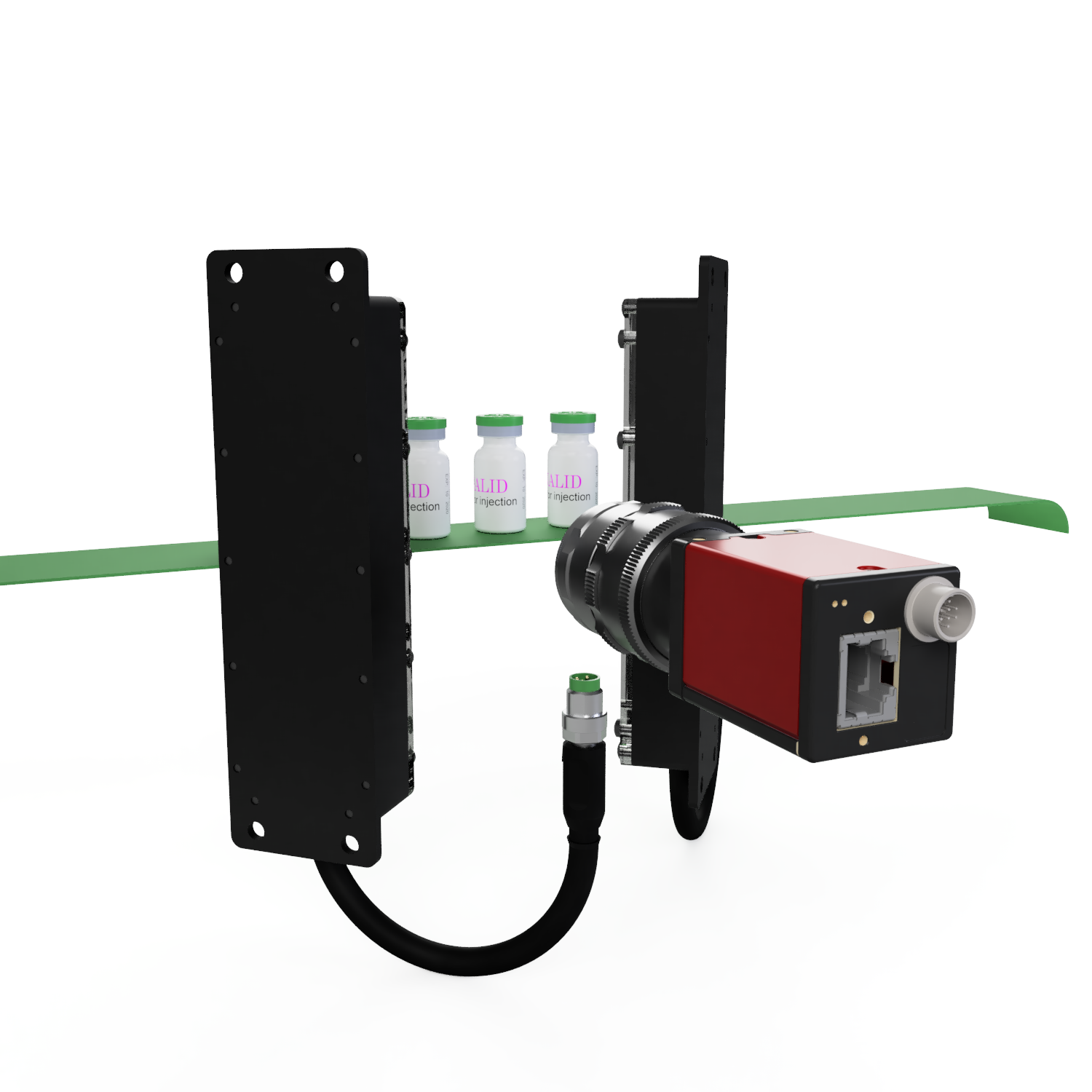
How to Read Blurred Barcodes: The Synergy Between Shutter Speed and Lighting
Reading barcodes on moving parts requires the right combination of shutter speed and high-intensity LED strobe illumination. A technical guide to eliminating motion blur in barcode and datamatrix reading for high-speed industrial vision systems.
-
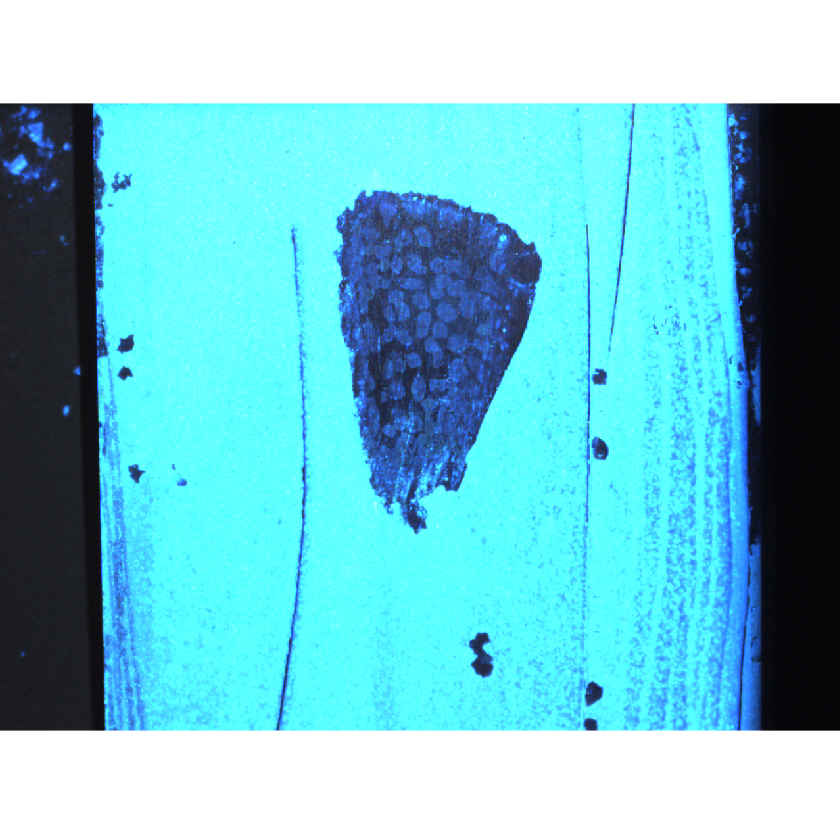
UV LED Illumination for Fluorescent Leak Detection and Security Markers
UV LED illumination excites fluorescent tracers for leak detection, security marker verification, and adhesive inspection. A technical guide to UV wavelength selection, illuminator design, and integration for industrial machine vision systems.
-
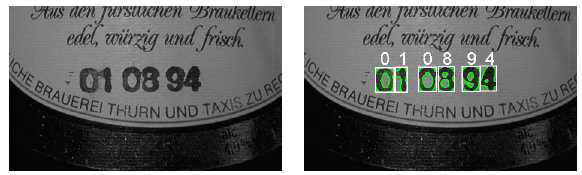
Label Inspection: Detecting Creases and Print Errors with Diffuse Lighting
Label inspection with machine vision requires diffuse LED illumination to detect print errors, missing text, creases, and misalignment. A technical guide to illumination geometry and wavelength selection for packaging label inspection systems.
-
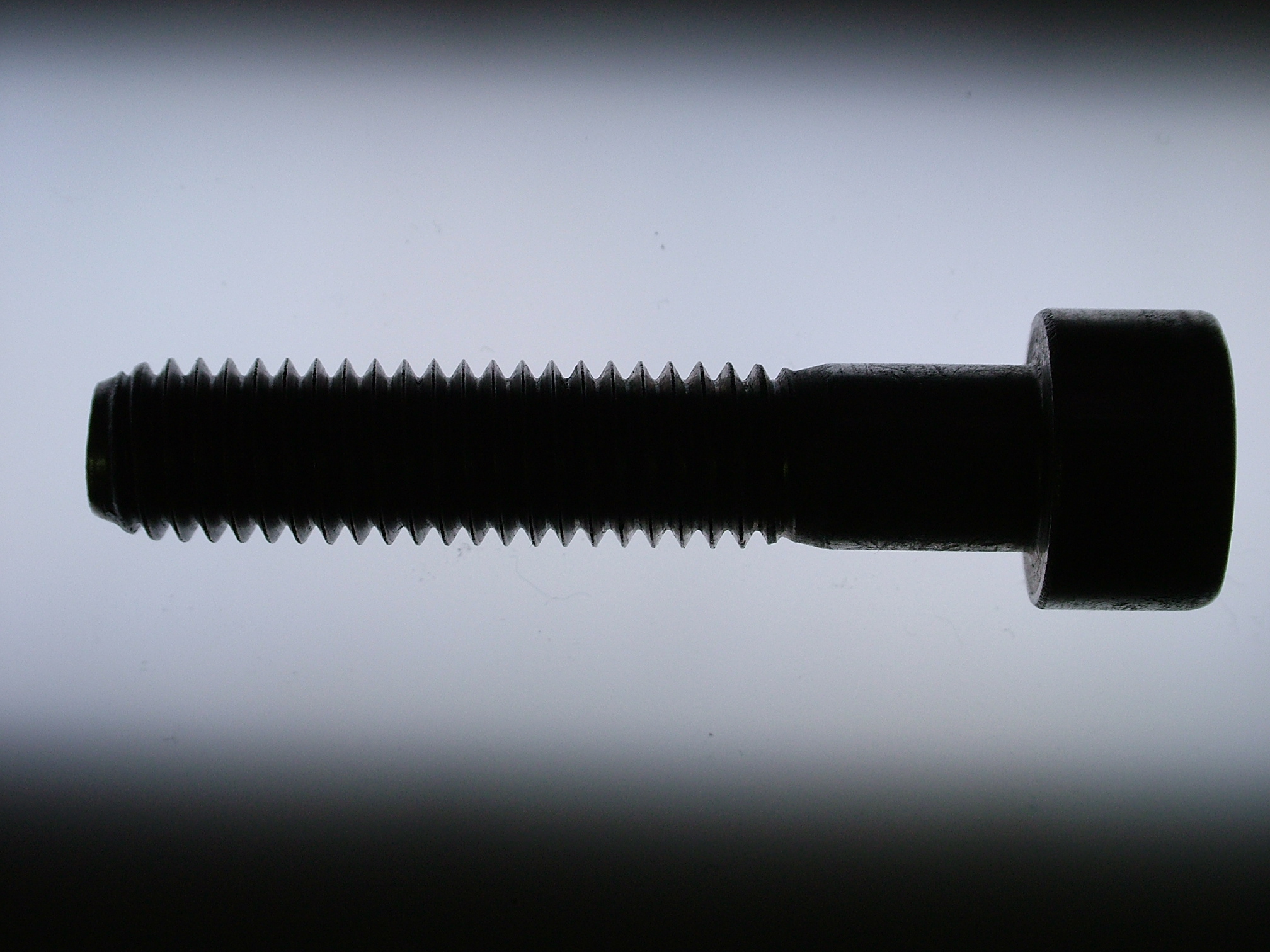
Fastener Dimensional Checks: Using Telecentric Lights for High-Precision Screws
Dimensional inspection of screws, bolts, and fasteners demands telecentric optics and high-uniformity backlight illumination. A technical guide to illumination geometry, backlighting, and measurement accuracy for precision fastener vision systems.
-
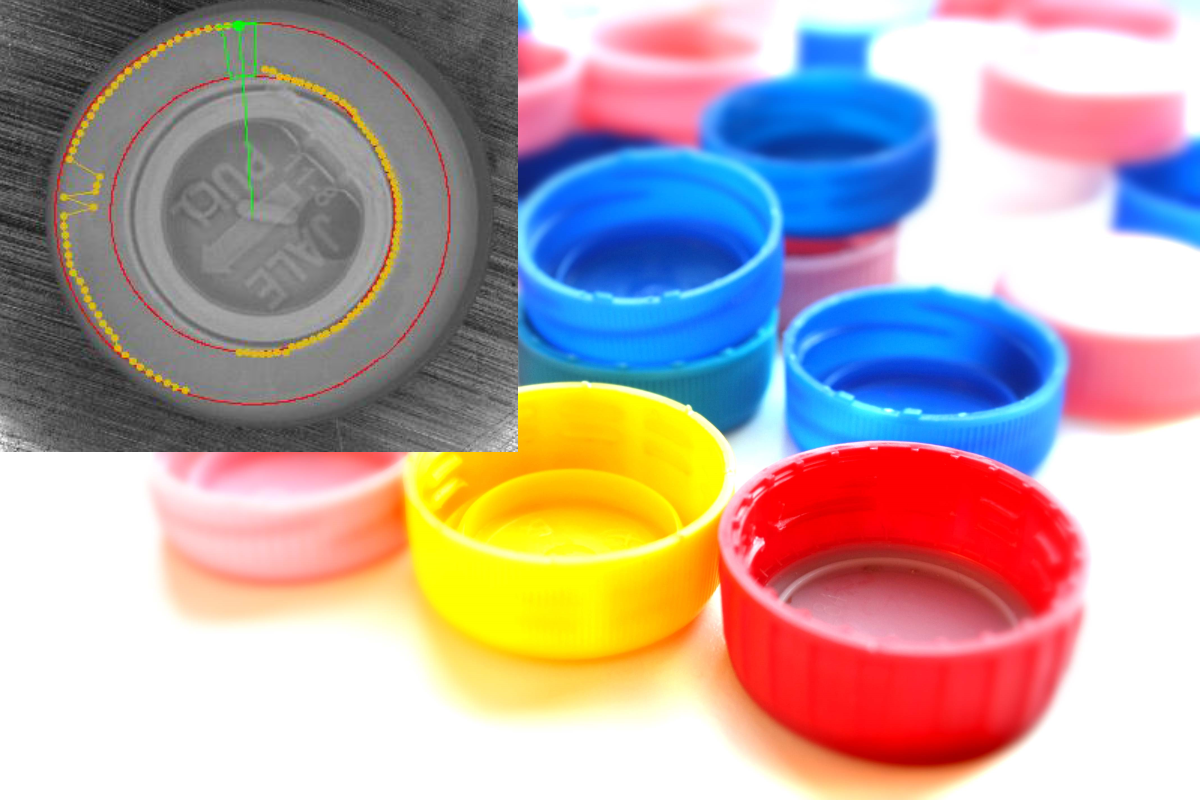
Precision Bottle Cap Inspection: Machine Vision & LED Lighting Solutions
Bottle cap inspection with machine vision requires specific LED illumination to detect cap presence, alignment, tamper evidence, and colour. A technical guide to selecting the right lighting for closure inspection systems.
-
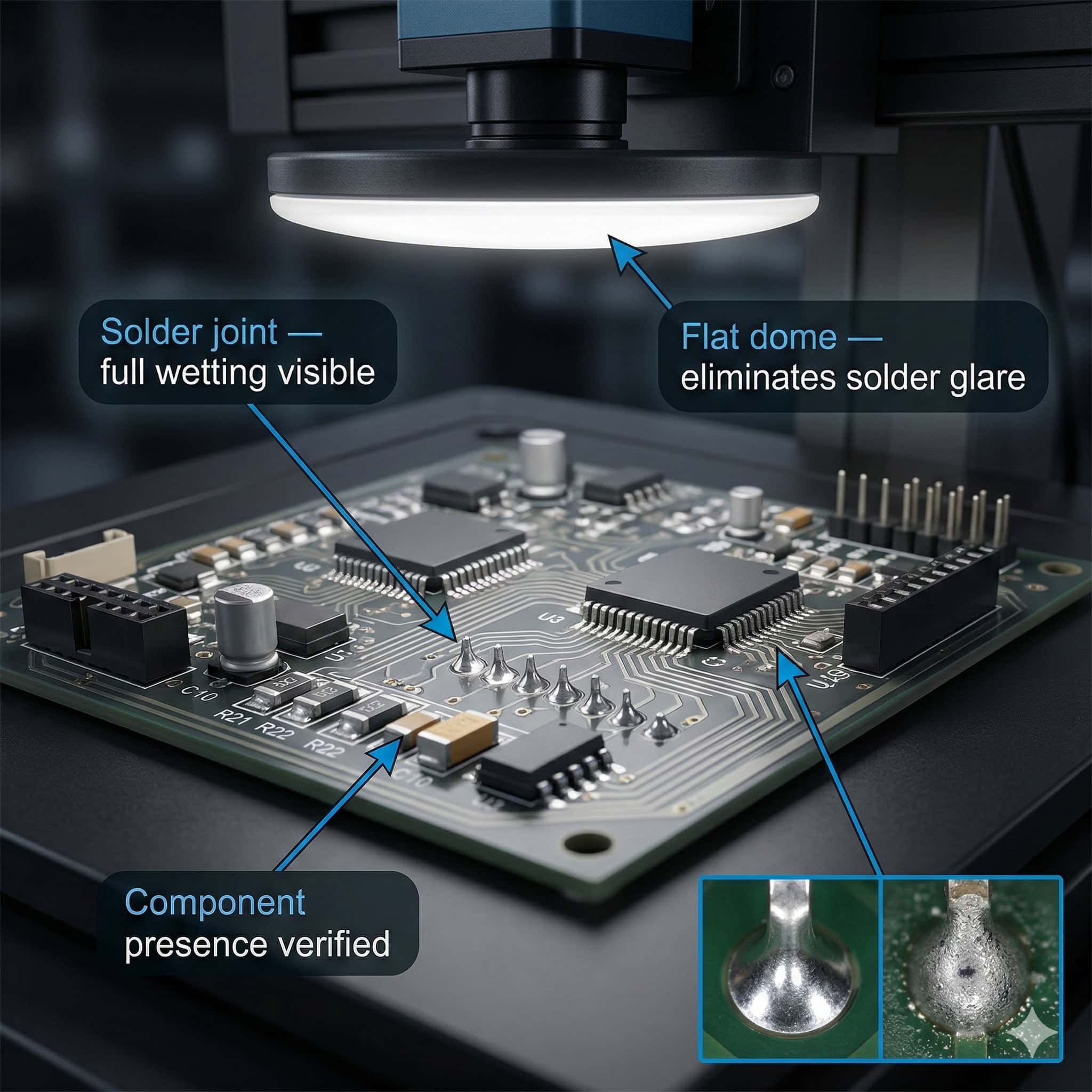
LED Illumination for PCB and Electronics Inspection: Soldering, Components and Trace Verification
Electronics manufacturing requires the most precise vision inspection of any industry. Learn how to select LED illuminators for PCB solder joint inspection, component placement verification, trace continuity checking and IC marking.
-
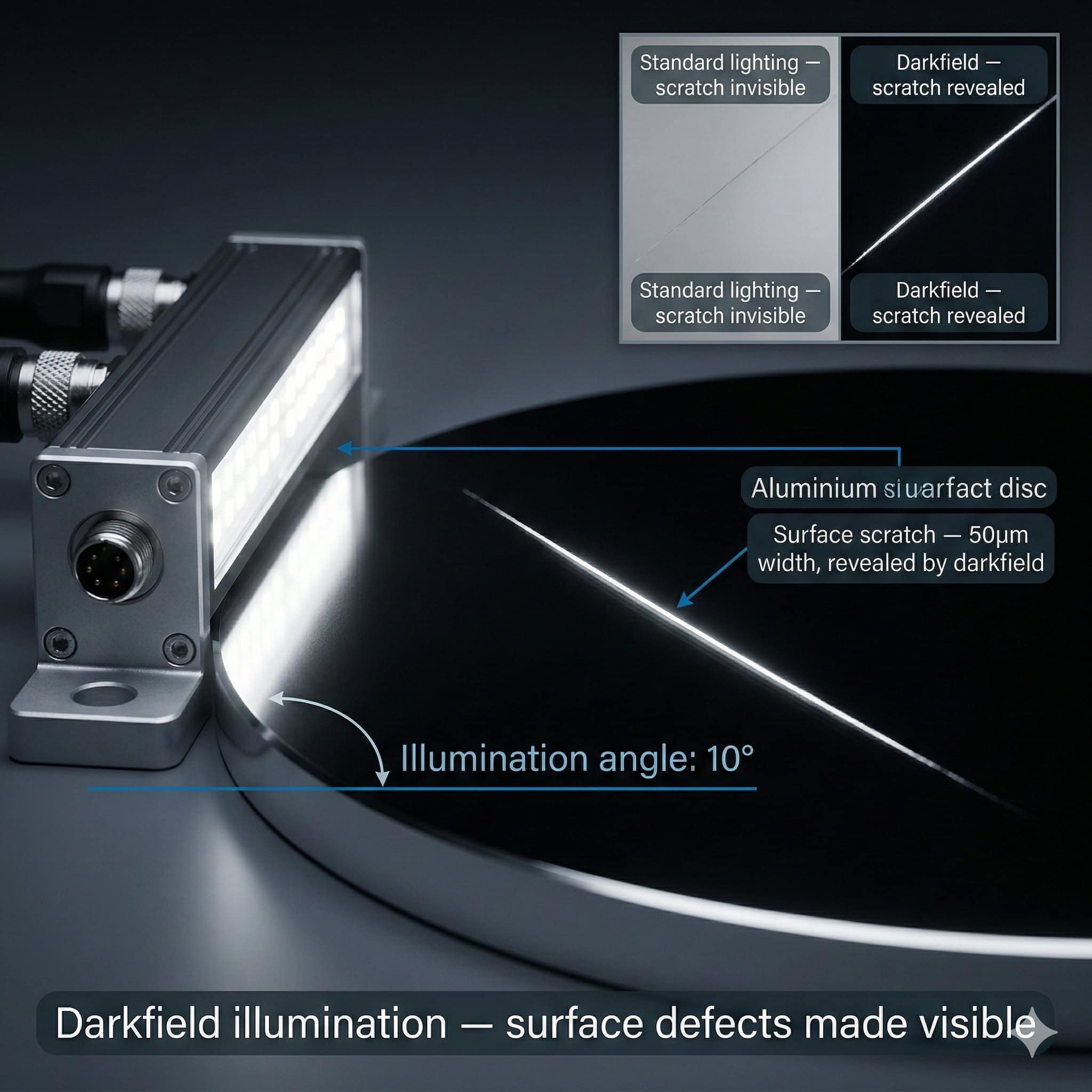
Darkfield Illumination: Revealing Surface Defects Invisible to Standard Lighting
How darkfield (low-angle) illumination exploits grazing incidence to reveal scratches, cracks, engraving, and surface texture on metals, glass, and plastics.
-
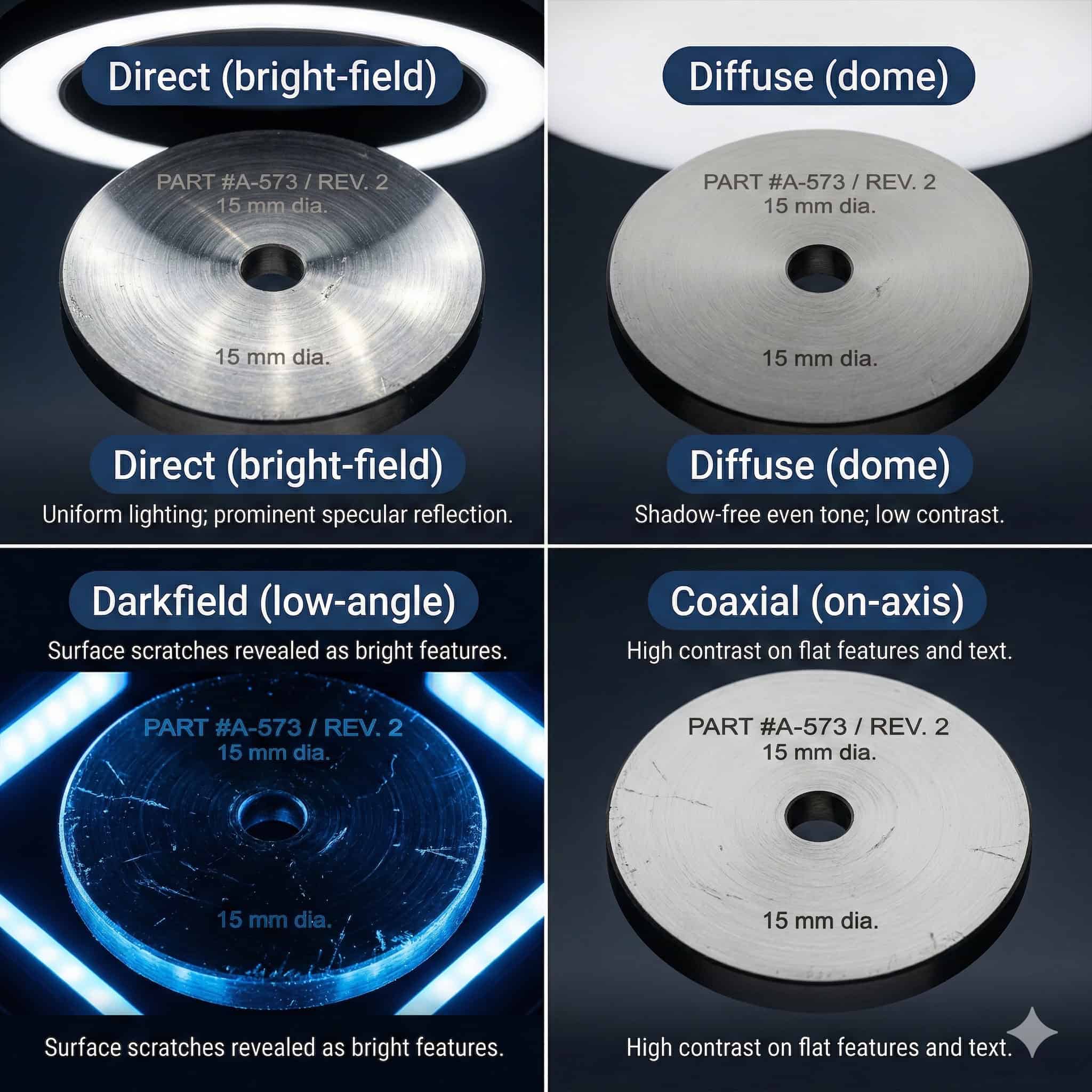
Direct vs. Diffuse Illumination: Choosing the Right Technique for Your Inspection Task
In-depth comparison of direct and diffuse illumination — when each excels, real application examples, and how RODER’s product families support both approaches.
-
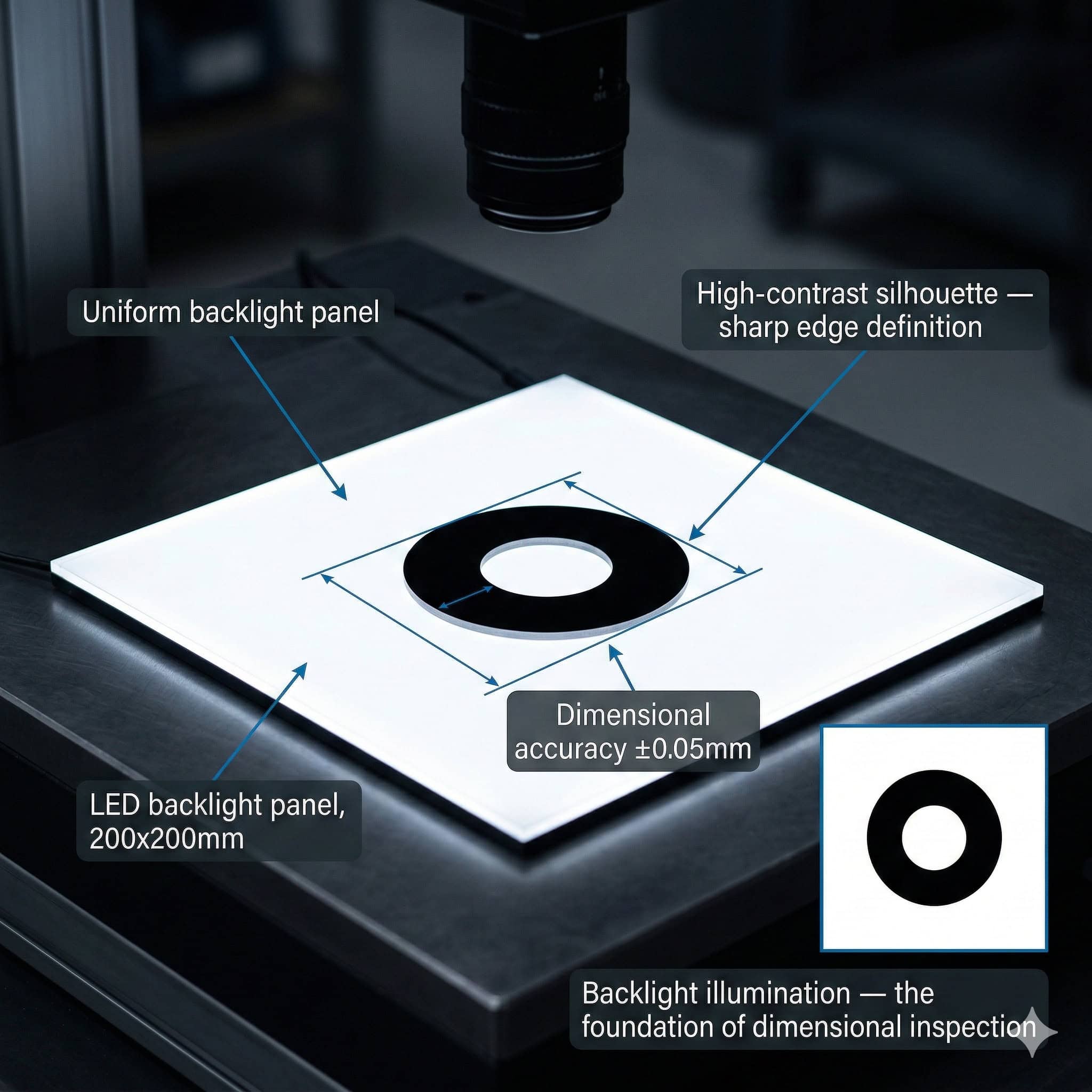
Backlight LED Illuminators: The Complete Guide to Silhouette and Transmission Inspection
Backlight illuminators create the high-contrast silhouettes that make dimensional measurement and contour inspection remarkably reliable. Learn everything about backlight design, uniformity requirements and the BL-series product range.
-

Machine Vision Lighting for Logistics and E-Commerce: Parcel Sorting, Dimensioning and Label Reading
The explosion of e-commerce has driven unprecedented demand for vision-based parcel sorting and dimensioning systems. Learn how LED illumination solves the key challenges: variable parcel sizes, high conveyor speeds, ambient light and barcode omnidirectionality.
-
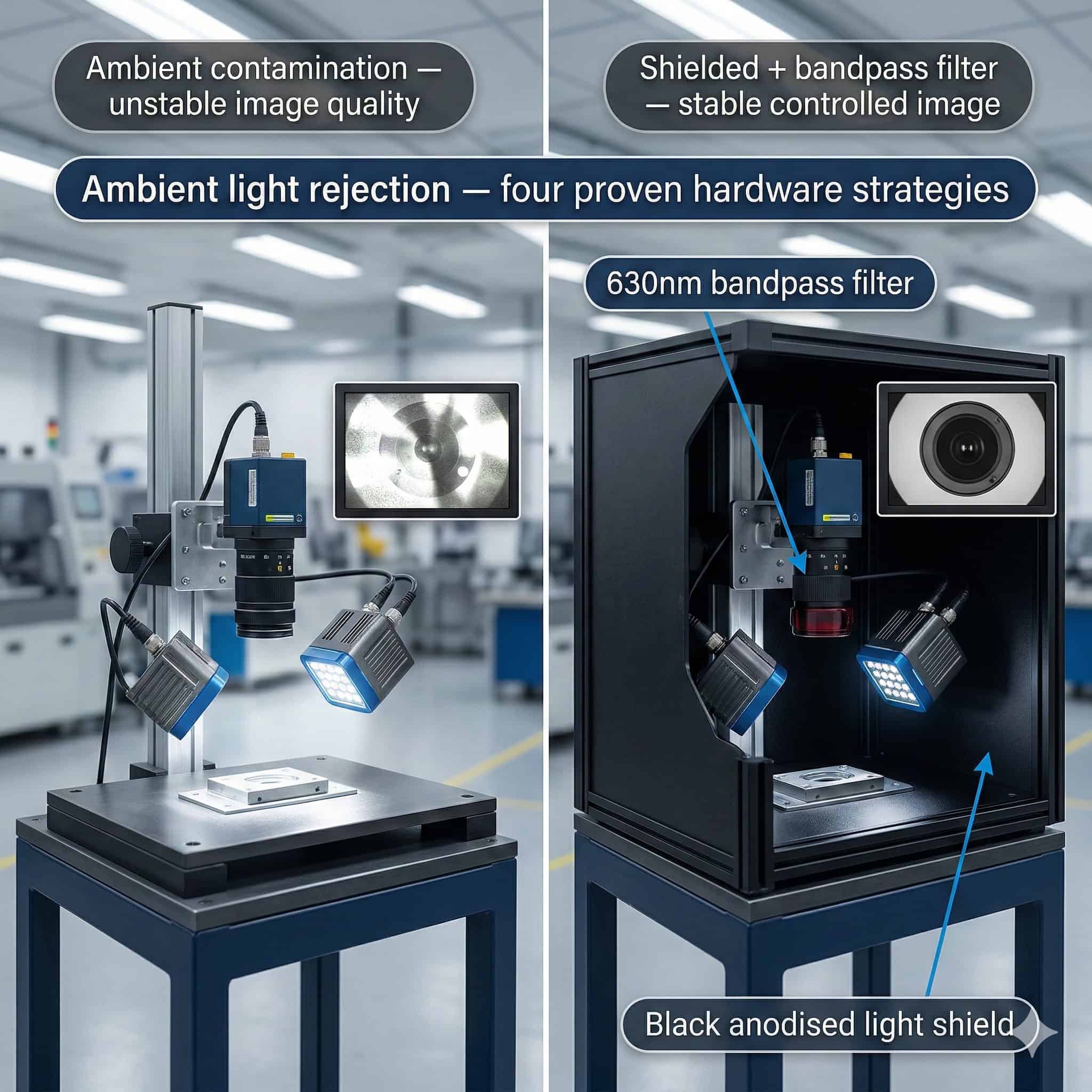
Ambient Light Rejection in Machine Vision: How to Protect Your System from Factory Lighting
Factory ambient light — fluorescent tubes, skylights, neighbouring machines — can ruin machine vision results if not properly managed. Learn the hardware and software strategies that make your inspection immune to environmental light variation.
-

IP Ratings for Machine Vision Illuminators: IP65, IP67, IP69K — What They Mean and When You Need Them
IP protection ratings directly determine whether an LED illuminator can survive in your production environment. This guide explains IP65, IP67 and IP69K ratings and helps you choose the right protection level for food, chemical, outdoor and washdown applications.
-
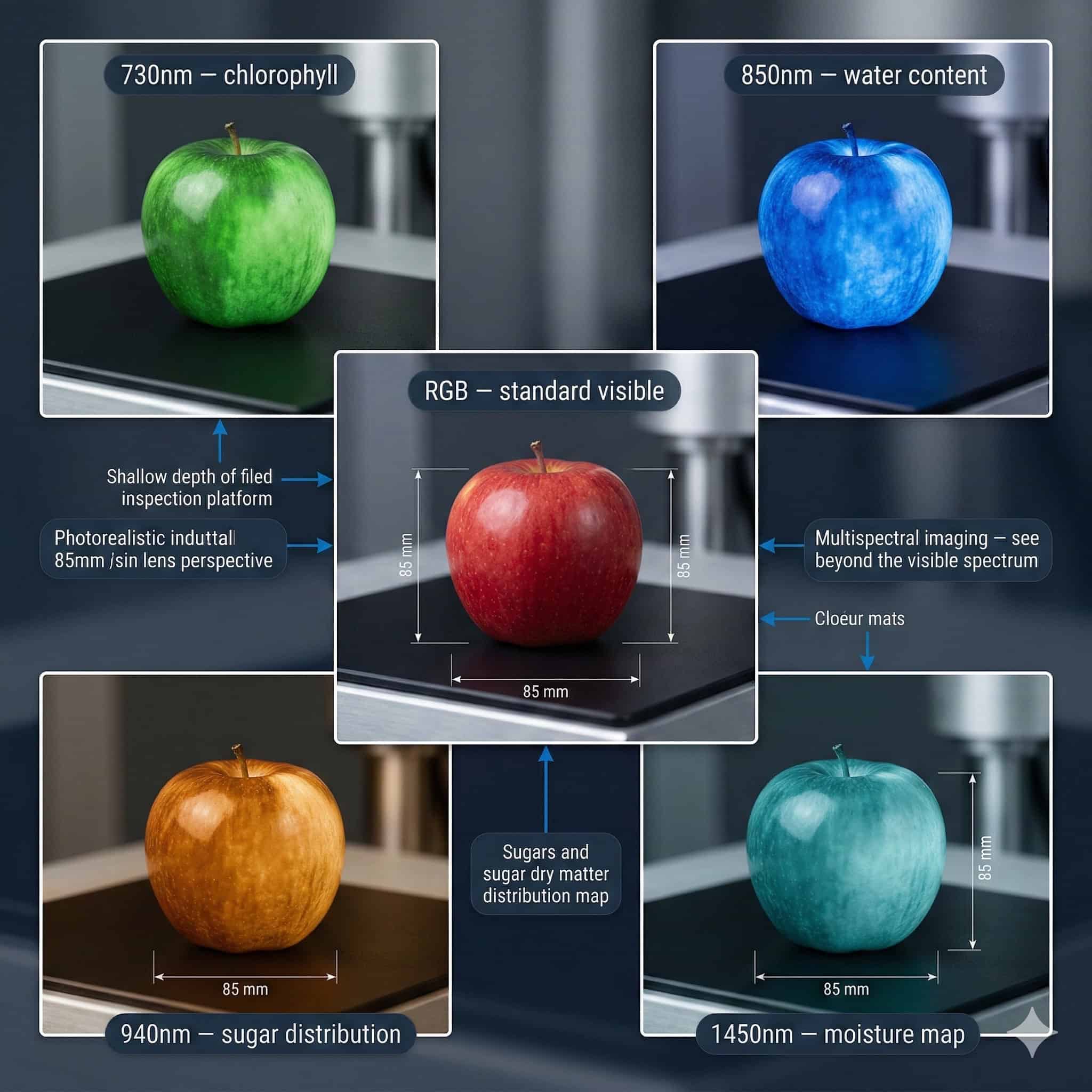
Hyperspectral and Multispectral Imaging: The Next Frontier for Industrial Quality Control
Hyperspectral and multispectral imaging see beyond what conventional monochrome or colour cameras can detect — revealing composition, contamination and material properties invisible to standard vision systems. Learn the state of the art and where it’s headed.
-
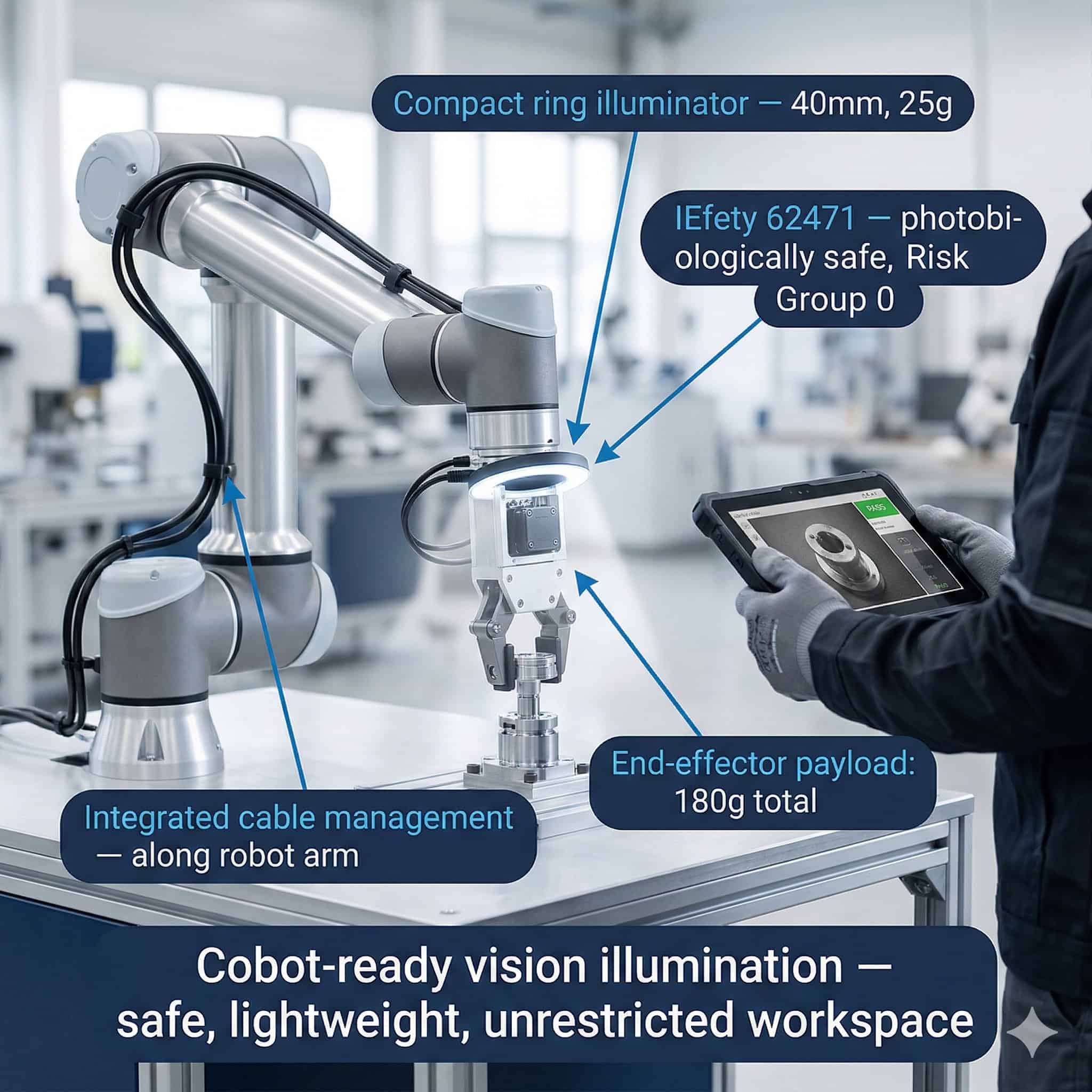
Vision Systems for Collaborative Robots: Lighting Considerations for Cobot Integration
Collaborative robots are transforming flexible manufacturing — and vision-guided cobots depend on lighting that’s safe, compact, flexible and easy to integrate. Learn the specific lighting requirements for cobot vision cells and how to meet them.
-

Machine Vision Market Trends 2025–2030: What’s Driving Growth in Industrial Inspection
The global machine vision market is forecast to exceed $18 billion by 2030. What’s driving this growth? Explore the key trends: AI adoption, semiconductor shortages driving localisation, e-commerce automation, sustainability and the rise of smart factories.
-

Why Made in Italy Matters for Machine Vision Illuminators: Quality, Traceability and Supply Security
Made in Italy is more than a marketing label — for precision industrial components like LED illuminators, it means full production traceability, strict quality control, ISO9001 certification and supply chain security. Here’s what it means in practice for RODER Vision.
-
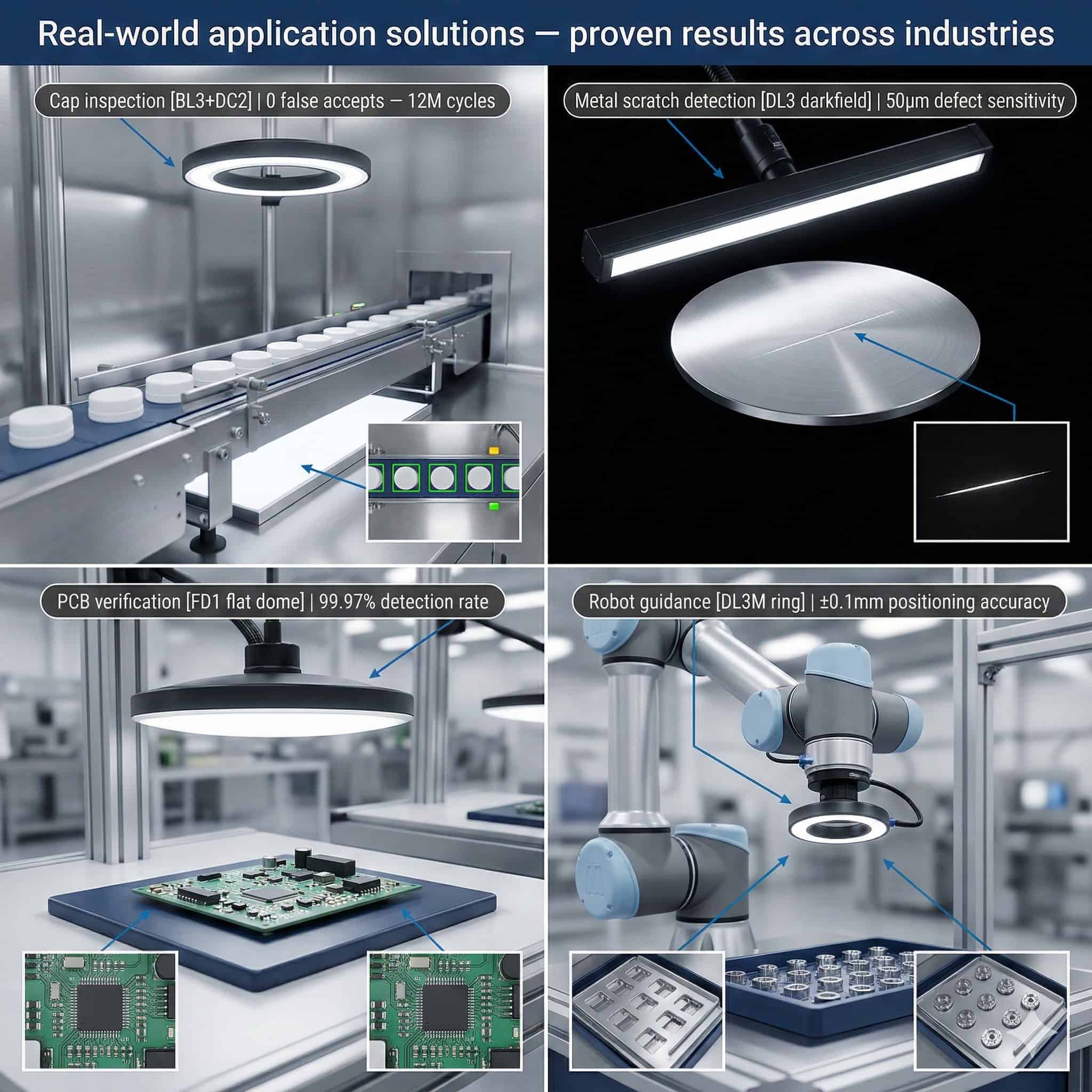
RODER Vision Application Notes: Real-World Machine Vision Lighting Solutions
Explore RODER Vision’s library of application notes: real-world machine vision inspection challenges solved with LED illumination. From cap inspection to automotive weld checking, each note documents the setup, lighting choice, results achieved and lessons learned.
-
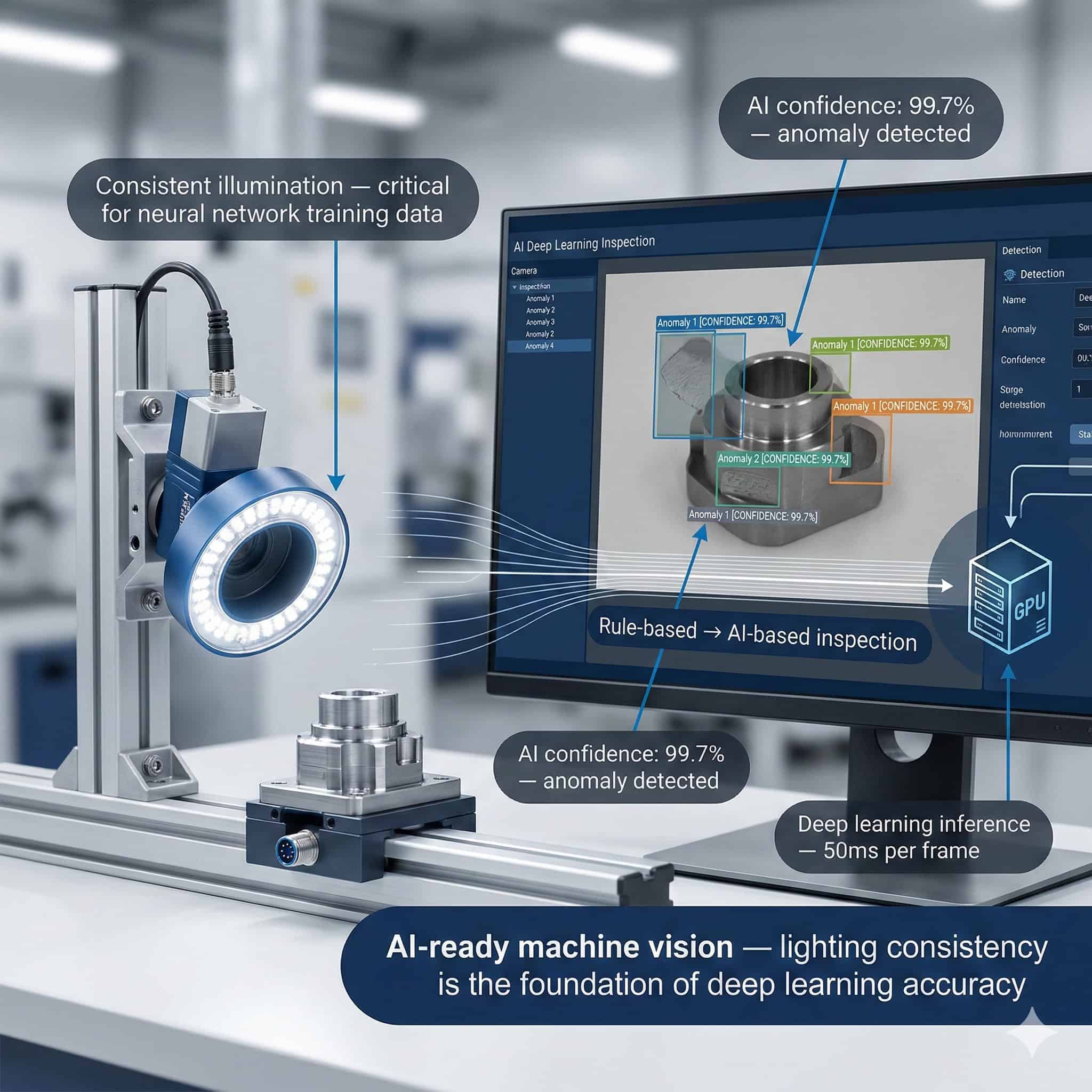
AI-Powered Machine Vision: How Deep Learning Is Changing Inspection Lighting Requirements
Deep learning is reshaping industrial inspection — but AI-based machine vision still depends on consistent, well-designed illumination. Discover how neural networks change lighting requirements, why dataset quality starts with the light source, and what AI-ready illumination means in practice.
-

Glass and PET bottle inspection: how to ensure compliance with LED backlights.
Inspecting glass and PET bottles presents unique challenges related to transparency and reflections. Learn how LED backlights allow you to look “through” the container to verify fill levels, cap integrity, and the presence of contaminants. An essential guide to ensuring food safety and full compliance in the beverage industry.
-

How to optimize packaging quality control with backlight illuminators.
Discover how to raise quality control standards in industrial packaging. The use of LED backlights allows for sharp profiles and precise measurements, eliminating interference caused by complex colors and graphics. A strategic investment to optimize production flows, drastically reduce false rejects, and ensure consistently flawless and compliant packaging.
-

Backlight LED illuminators for shadow-based vision systems
Backlight LED illuminators for shadow-based vision systems provide high-contrast silhouettes for precise dimensional, profile, and geometric inspections. Widely used across industries, they ensure accurate measurements and reliable quality control. With long-lasting efficiency and uniform illumination, LED backlights are essential for modern machine vision in automated production environments.